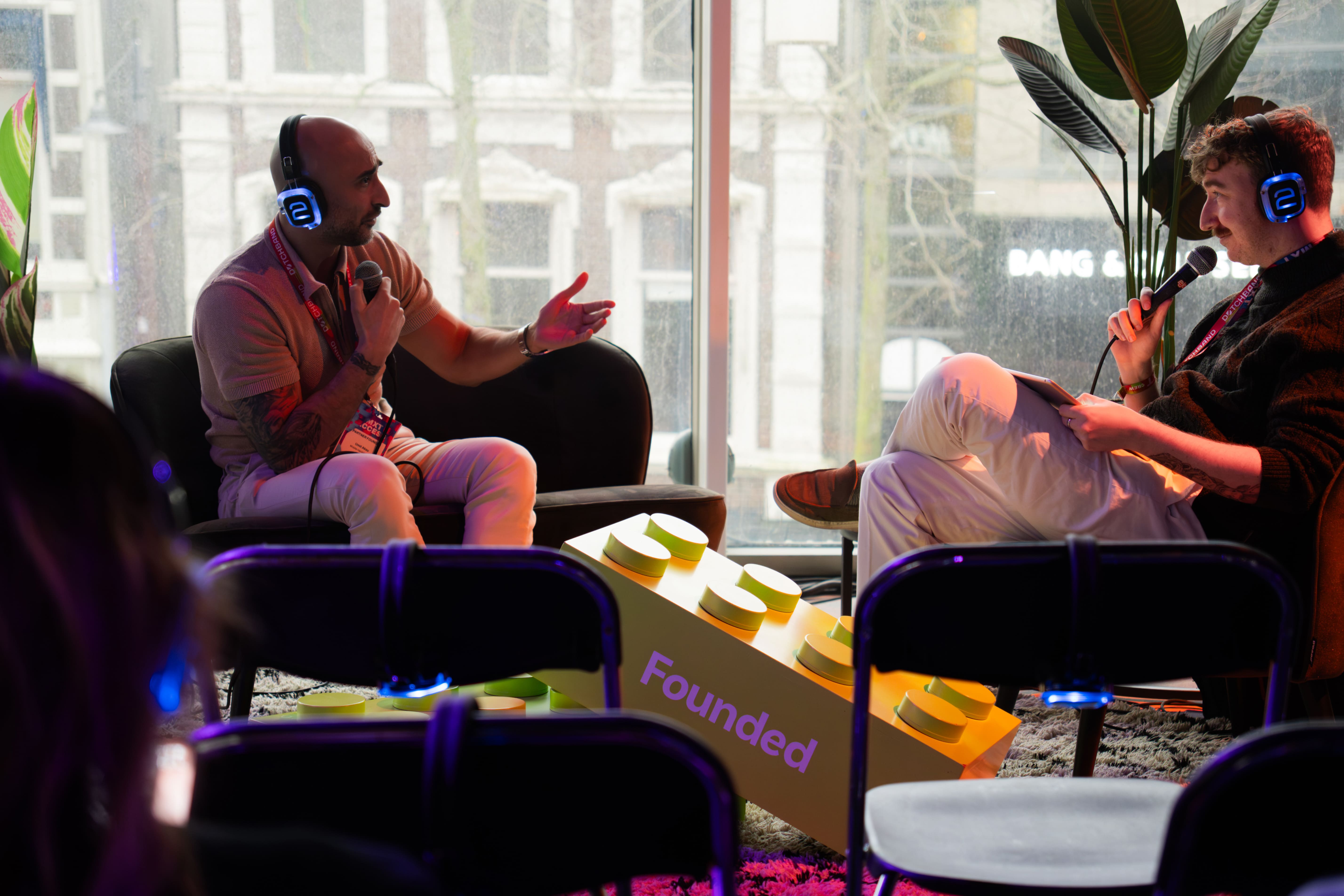
How Umit Aksu shook up the security world with free courses

Mobile Hacking Lab
"I lost my mind a bit during that time," says Umit Aksu honestly. Three years ago, he worked full-time at Microsoft. He had a good job, a great salary, and all the security one could wish for. But in the evenings and on weekends, he was building Mobile Hacking Lab. He did that 12 to 15 hours a day, on top of his regular job. "I don't know if that's healthy, but that's just how I just was."
I skipped school and was a bit of a difficult child.
From 13-year-old hacker to corporate
Umit first touched a computer at thirteen. He immediately started programming and hacking. "It was a playground. Back then, there weren't any Hack The Box-like environments to practice in. So, anything you could think of, I'd go for it." He quickly found vulnerabilities in systems. For example, Umit managed to hack a payment provider and transfer millions of euros. He didn't actually do it, but he did inform the company. They found it quite remarkable and decided to offer him a job.
School wasn't really his thing. "I skipped school and was a bit of a difficult child." Umit only later resumed his education, at a faster pace than usual. ING then hired him while he was still studying, on the condition that he would get his diploma. He did.
At ING, he started as a penetration tester. Thanks to his unconventional background, he discovered vulnerabilities that others missed. "People on my team started to believe more in what I was doing." He became a team leader. Later, he worked for Dark Matter in the United Arab Emirates and Microsoft. All big names, and Umit was living the dream.
Until he realized it wasn't his dream.
Just a company
"Microsoft is a great company, don't get me wrong," Umit says cautiously. "But it's still 'just' a company. Just like ING, and just like any other company." He noticed that within those companies, he was doing the same things a startup founder does: pitching, defending budgets, and convincing people of your idea. "Only I was doing it for their goals, not mine."
For years, he had been giving training sessions alongside his job. Training on mobile security at conferences worldwide. And he saw a problem: "Other training sessions recycled the same material, while attackers continued to evolve. The world needed this. We need to lead, not follow."
They all said, 'Yes, this needs to change.' That validated me. We opened the book that had been closed.
The disruptive strategy
In January 2023, Mobile Hacking Lab launched. Umit took an unconventional approach by offering free basic courses. He made courses available online for free that other companies charged for. "Our strategy was to make that material even better and give it away for free, thereby elevating the entire world to the next level."
How did competitors react to his disruptive strategy? "I haven't heard from them directly, but I'm quite sure some weren't pleased." Umit had already established his expertise over many years. "I'd been providing training on advanced topics for years. When I launched this, they had nothing to say."
His first LinkedIn post on the subject garnered 400 likes, with comments from security leaders at Google, Microsoft, and other tech giants. "They all said, 'Yes, this needs to change.' That validated me. We opened the book that had been closed."
When I look back at those videos now, I think, 'What an amateur!'" But that's the whole point – you just have to start.
Whispering next to sleeping children
Recording the first courses was hell. "Initially, I was so frustrated. My children were sleeping in the next rooms, so I had to whisper. Every five minutes, they'd hear me start over." They still joke about it to this day.
"When I look back at those videos now, I think, 'What an amateur!'" But that's the whole point – you just have to start. "We could start recording in two or three minutes. Now we have a studio and everything is professional. But back then? It was a pure struggle."
It cost Umit everything he had. "Every share and every bit of savings I had went into it. Fortunately, I was well-paid at Microsoft, so I could hire people. But it was a battle. Finding good people is tough, and they often demand high salaries. In the first year alone, this certainly cost me 20 to 30,000 euros out of my own pocket."
That was huge validation. If Google takes this seriously, we're in a good place.
From 11 to 10,000
Three years later, Mobile Hacking Lab has 11 employees. But these aren't just any people. Some had already worked with Umit for years on courses and conferences and joined organically. Others came from his old team at ING. "Without their help, this never would have worked. The biggest mistake people make is thinking you can do everything alone. You absolutely cannot."
Now, external trainers also give courses on the platform, including Black Hat trainers and big names from the security world. "They all go through the same process. We laugh about it because it's funny to see them struggle with recordings, just like I did back then."
The big breakthrough came when Google became a client. "Their security team contacted us. They wanted to do the entire Android security series, not just one course." Umit still remembers that moment clearly. "That was huge validation. If Google takes this seriously, we're on the right track."
Mobile Hacking Lab's growth is explosive. "Revenue quadrupled last year. And B2B sales are almost as large as last year's total revenue. We're at that tipping point that startups experience. First, you have to push incredibly hard, but then suddenly it takes off on its own."
Tough, costly choices
Entrepreneurship cost him moments he'll never get back. His wife's father was dying. Umit was at his bedside but had promised to attend a conference. "My wife said: you have to go. There's no point in staying here." On the plane, he received the news: his father-in-law had passed away. "It was very difficult to leave my wife in such a situation."
He also had to miss his son's first musical. And there were more moments like that. "But everyone who knows what I'm building now understands the sacrifice I'm making. We're building something bigger than just doing work."
If you can fight your own brain, you'll make it.
The mental game
Umit compares it to an elite military unit. "You have to be able to cover long distances, endure sleepless nights, and handle an enormous amount of stress. It's exactly the same. To keep that up, I get up early every morning, exercise, and meditate. Then the work begins."
And that remains difficult. "You constantly have that voice in your head asking what I'm doing. Is this all really okay? I thought: that's a cliché. But it's really true, because entrepreneurship is an elite sport. That's the most important thing to realize. If you can fight your own brain, you'll make it."
Umit's advice to others? "Work hard and deliver fast. That's all that matters." Perfectionism is the enemy. "If you deliver slowly, others will already be ahead of you. If you start something new, others suddenly see: oh, there's a gap in the market. Let's start too. The only way to win is not to focus on them, but to work harder and deliver more than anyone else. You can do that too."
Interview & text | Lars Meijer